- Home
- Products
- Projects
- Solutions
- News
- Services
- About Us
- Blog
- Contact Us
Inquiry
Form loading...
Choosing among the 7 Best Rock Crushers for Global Buyers in 2026 requires more than comparing prices and engine sizes. A crusher working beside a dry quarry may fail in a wet, abrasive mine. Feed size, rock hardness, moisture, required output, mobility, maintenance access, and local power supply all change the decision. Small details matter. A blocked chamber can stop an entire production line.
Comminution specialist Dr. Tim Napier-Munn has stated, “Comminution is the largest energy consumer in mineral processing.” His observation remains highly relevant when buyers assess Rock Crushers for long-term use. Fuel consumption, liner wear, spare-part availability, and operator skill can affect total ownership costs more than the purchase price. A compact jaw crusher may suit a remote road project. A cone crusher may deliver better shape for aggregate production. Neither choice is automatically superior.
This guide examines seven practical machine categories and their common applications. It considers performance, reliability, transport requirements, safety features, and after-sales support. Real-world conditions are rarely perfect. Product specifications may look impressive, yet field performance can vary with feed preparation and maintenance discipline. Buyers should question optimistic capacity claims and request test data when possible. The strongest choice is not always the most powerful machine. It is the crusher that fits the material, site, budget, and service network. That is the difficult part. It is also where careful judgment creates lasting value.
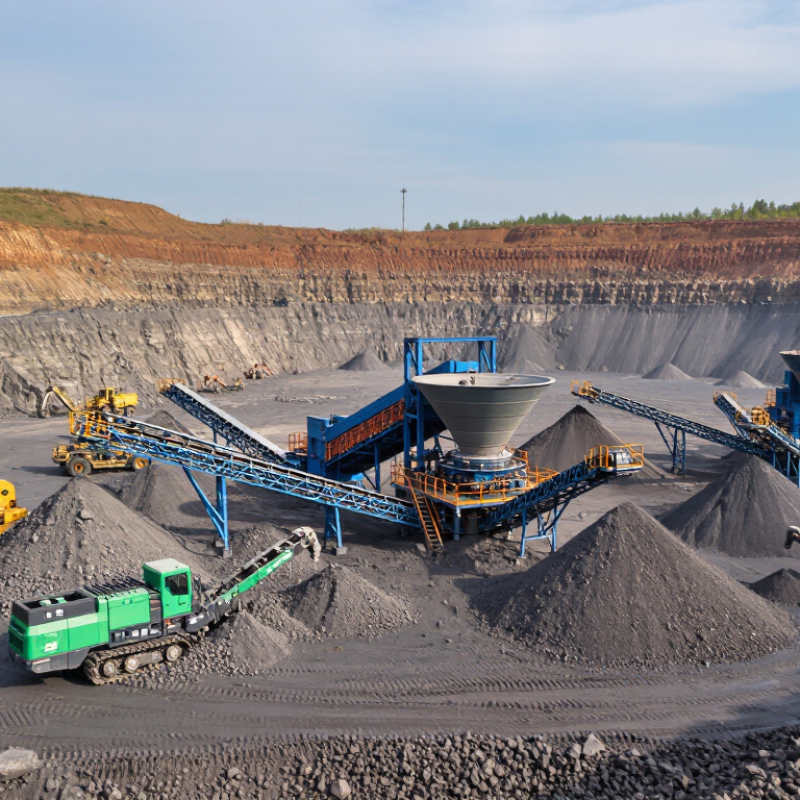
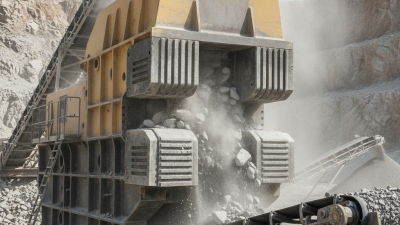
Rock crushing begins with reduction, not machine size. Feed material enters a chamber, meets compressive or impact force, and leaves through a controlled gap. Jaw crushers suit hard, irregular rock and primary reduction. Cone crushers refine harder stone into consistent aggregates. Impact crushers handle softer rock and shape particles effectively. The right choice depends on abrasiveness, moisture, feed size, and desired output. A larger machine is not automatically better.
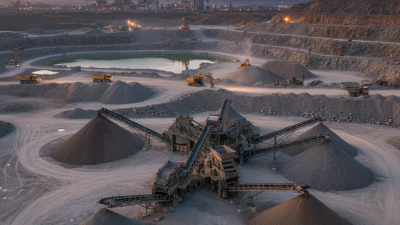
Applications vary across construction and resource projects. Crushed rock supports road bases, drainage layers, concrete aggregate, and manufactured sand. In a quarry, a primary unit may feed a secondary crusher and screening circuit. On a remote site, compact equipment can reduce hauling distance and fuel use. Dust suppression, guarding, noise control, and emergency stops require careful planning. Small details matter.
Global buyers should compare capacity, motor requirements, wear-part access, and service support. Ask for test data using material similar to your own deposit. Check product size at realistic settings, not only catalogue figures. A clean estimate may still fail when wet clay blocks the feed. I have found that maintenance access is often underestimated. Operators need safe walkways, clear inspection points, and simple adjustment procedures. Local power conditions and spare-part availability also influence dependable production. No crusher fits every site.
A practical comparison of major rock crusher types, typical operating ranges, applications, and selection considerations
| Crusher Type | Typical Feed Size | Typical Product Size | Typical Capacity | Typical Installed Power | Best Applications | Main Advantages | Key Limitations |
|---|---|---|---|---|---|---|---|
| Jaw Crusher | Up to approximately 1,200 mm, depending on the inlet opening and machine size | Approximately 50–300 mm after primary crushing | About 50–1,500 t/h | Approximately 75–400 kW | Primary crushing of hard rock, aggregates, mining ore, demolition waste, and quarry materials | Simple design, high compression strength, reliable operation, and good tolerance for abrasive rock | Product shape can be less cubical; requires secondary or tertiary crushing for fine aggregates |
| Cone Crusher | Approximately 50–560 mm, depending on the chamber and model configuration | Roughly 6–100 mm | About 50–1,200 t/h | Approximately 90–1,000 kW | Secondary and tertiary crushing of hard, abrasive stone, including granite, basalt, and high-strength ores | Good reduction ratio, consistent product grading, and efficient continuous crushing | Less suitable for sticky or clay-rich feed; requires controlled feed and regular wear-part inspection |
| Horizontal Shaft Impact Crusher | Approximately 200–1,000 mm | About 10–150 mm | Approximately 100–800 t/h | About 110–800 kW | Limestone, recycled concrete, asphalt, soft-to-medium-hard rock, and applications requiring cubical aggregate | High reduction ratio, excellent particle shape, and adjustable product grading | Blow-bar and impact-liner wear can be high when processing very abrasive rock |
| Vertical Shaft Impact Crusher | Usually up to approximately 100 mm, depending on the feed arrangement | Commonly below 5–25 mm | About 50–600 t/h | Approximately 75–800 kW | Manufactured sand, cubical shaping, fine aggregate production, and final-stage crushing | Produces well-shaped particles, improves sand quality, and supports controlled fine crushing | Higher power demand per tonne in some applications; wear cost increases with abrasive feed |
| Gyratory Crusher | Approximately 1,000–1,500 mm or more in large primary installations | Typically 100–300 mm after primary reduction | About 1,500–10,000 t/h | Approximately 500–2,500 kW | Large-scale metal mining, high-throughput hard-rock operations, and continuous primary crushing | Very high capacity, continuous operation, and strong performance with large run-of-mine feed | High capital cost, large foundation requirements, and limited suitability for small plants |
| Hammer Crusher | Approximately 100–600 mm | About 3–100 mm | Approximately 5–500 t/h | About 30–800 kW | Limestone, gypsum, coal, marl, and other soft-to-medium-hard, low-abrasion materials | High reduction ratio, compact layout, and ability to produce relatively fine material in one stage | Rapid wear when used on highly abrasive or very hard rock; moisture and sticky feed can reduce performance |
| Roll Crusher | Approximately 50–300 mm | About 1–50 mm | Approximately 50–1,000 t/h | About 30–600 kW | Coal, salt, limestone, clay, medium-hard minerals, and applications requiring a narrow product distribution | Low over-crushing, controlled product size, relatively low dust generation, and compact equipment design | Generally unsuitable for very hard, highly abrasive rock; capacity depends strongly on material moisture and roll design |
Note: Capacity, feed size, product size, and power figures are typical industry ranges for preliminary comparison. Actual performance depends on rock hardness, abrasiveness, moisture, feed gradation, reduction ratio, chamber design, operating settings, and plant configuration.