- Home
- Products
- Projects
- Solutions
- News
- Services
- About Us
- Blog
- Contact Us
Inquiry
Form loading...
Choosing a Stone Crusher Machine in 2026 requires more than comparing prices and engine power. Quarry owners must examine rock hardness, feed size, moisture, required output, fuel use, maintenance access, and local service support. A machine may look powerful on paper but perform poorly with sticky limestone or highly abrasive granite. Small details matter.
Quarrying specialist Mike Woof has stated, “The right machine is the one that fits the whole process, not just the rock.” This principle remains practical today. A jaw crusher may handle primary breaking efficiently, while a cone crusher can improve shape and grading during secondary processing. Impact crushers suit some softer materials, but their wear costs may rise with abrasive stone. Real site tests are more trustworthy than attractive brochures.
Look beyond capacity claims.
A reliable selection also considers automation, dust control, worker safety, spare-part availability, and the skill level of the operating team. Battery systems and hybrid drives may reduce fuel consumption, yet their value depends on duty cycles and charging access. New technology is useful, but not automatically better. I have seen buyers focus on hourly capacity and overlook downtime, which later changes the entire cost calculation. That mistake is easy to repeat.
This guide will compare crusher types, technical specifications, ownership costs, and supplier reliability. It will also question optimistic production figures and explain where they may fail. The best Stone Crusher Machine is not always the largest or newest model. It is the machine that remains productive, serviceable, and financially sensible under real working conditions.
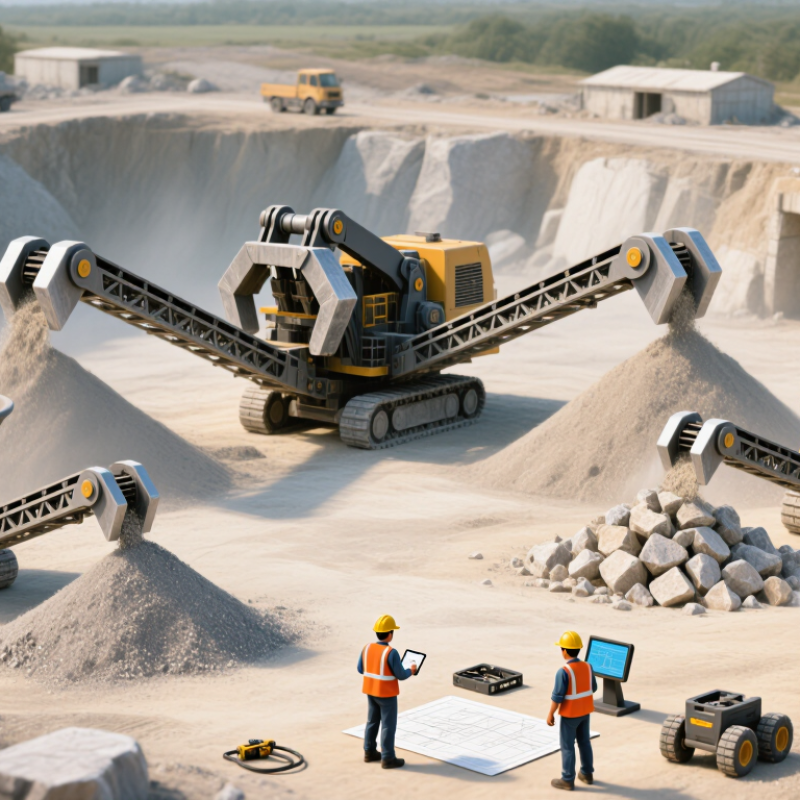
How to Choose a Stone Crusher Machine in 2026?
Define your crushing requirements before comparing machine specifications. Measure the feed material at the actual site. Record its hardness, moisture, abrasiveness, and maximum rock size. A dry limestone feed behaves differently from wet, clay-heavy gravel. That difference affects capacity and blockage risk. Decide your target output size, too. Road base, manufactured sand, and concrete aggregate require different crushing stages. Do not rely only on a supplier’s maximum capacity. It often assumes ideal feed conditions.
Estimate your hourly production goal and daily operating hours. Include loading delays, screen cleaning, maintenance, and seasonal weather. A machine rated at 100 tonnes per hour may produce less in a congested quarry. Check the available power supply, foundation strength, transport access, and dust-control equipment. These details are easy to overlook. They can create expensive redesigns later. Ask for test results using material similar to yours. Laboratory data helps, but site trials reveal practical problems.
Your budget should cover wear parts, energy, operators, and planned downtime. Choose a machine that matches the whole process, not just the crusher. A smaller unit may be more reliable when production demand is modest. A larger unit may waste power and increase maintenance costs. I have seen neat spreadsheets hide weak assumptions. Recheck every number against real site measurements. Even experienced teams sometimes underestimate moisture, fines, or changing feed conditions. Leave room for adjustment.
| Crusher Type | Typical Crushing Stage | Suitable Feed Size | Typical Product Size | Approximate Capacity Range | Typical Reduction Ratio | Best-Suited Materials | Key Selection Considerations |
|---|---|---|---|---|---|---|---|
| Jaw Crusher | Primary | Up to approximately 1,000–1,200 mm, depending on model | 100–300 mm | 30–1,500 t/h | About 3:1 to 6:1 | Hard rock, granite, basalt, limestone, concrete, and recycled demolition material | Choose a jaw crusher when the feed is large and the material is hard or abrasive. Check the feed opening, CSS adjustment range, and required production rate. |
| Gyratory Crusher | Primary | Up to approximately 1,500 mm or more in large installations | 100–300 mm | 1,000–8,000 t/h | About 4:1 to 8:1 | Large-scale mining ores and very hard, abrasive rock | Consider this type for continuous, high-volume operations. It normally requires substantial civil works, installation space, and capital investment. |
| Impact Crusher | Primary or Secondary | Up to approximately 500–800 mm | 20–100 mm | 50–800 t/h | About 10:1 to 20:1 | Soft to medium-hard limestone, recycled concrete, asphalt, and less-abrasive rock | Use an impact crusher when high reduction and cubical particle shape are important. Abrasive feed can increase wear on blow bars and impact plates. |
| Horizontal Shaft Impact Crusher | Primary or Secondary | Up to approximately 600 mm | 20–80 mm | 100–800 t/h | About 10:1 to 20:1 | Limestone, recycled concrete, asphalt, and aggregate with moderate abrasiveness | Evaluate rotor speed, chamber design, blow-bar material, and the percentage of fines required in the final product. |
| Cone Crusher | Secondary or Tertiary | Up to approximately 350 mm, depending on chamber configuration | 10–75 mm | 50–1,200 t/h | About 3:1 to 6:1 per crushing stage | Hard and abrasive rock, granite, basalt, iron ore, and high-quality aggregates | Select the chamber type, closed-side setting, liner profile, and crushing force according to feed size, hardness, and target gradation. |
| Vertical Shaft Impact Crusher | Tertiary or Shaping | Usually below 60 mm | 0–25 mm | 30–600 t/h | About 4:1 to 8:1 | Aggregates, manufactured sand, glass, slag, and relatively abrasive rock | Choose VSI equipment when particle shape, manufactured sand quality, or controlled fines production is a priority. Rotor and anvil configuration affects wear and product shape. |
| Roll Crusher | Secondary | Up to approximately 250 mm | 5–50 mm | 50–1,500 t/h | About 3:1 to 6:1 | Coal, salt, limestone, soft shale, gypsum, and other relatively soft materials | Consider roll crushers for controlled product sizing and low over-crushing. They are generally less suitable for very hard, highly abrasive feed. |
| Hammer Crusher | Primary or Secondary | Up to approximately 600 mm | 0–50 mm | 5–1,500 t/h | About 10:1 to 50:1 | Coal, limestone, gypsum, clay, and other soft to medium-hard materials | Check moisture content, abrasiveness, maximum feed size, and allowable fines. High-impact operation can produce significant fines and wear. |
| Mobile Jaw Crusher | Primary | Up to approximately 1,000 mm | 100–300 mm | 100–600 t/h | About 3:1 to 6:1 | Rock excavation, road construction, quarrying, and demolition recycling | Prioritize mobility, transport dimensions, fuel or electrical supply, onboard conveyors, dust control, and setup time when processing locations change frequently. |
| Mobile Cone Crusher | Secondary or Tertiary | Up to approximately 300 mm | 10–75 mm | 100–500 t/h | About 3:1 to 6:1 | Hard rock, aggregates, railway ballast, and construction recycling | Match the mobile cone unit with the upstream crusher and screening plant. Confirm liner life, hydraulic adjustment, and recirculation requirements. |