2026 How to Choose the Right Portable Jaw Crusher for Your Needs?
Choosing the right Portable Jaw Crusher can be a daunting task. Industry expert James Porter emphasizes, "Not all crushers are created equal." This statement rings true as various models come with different features and capabilities.
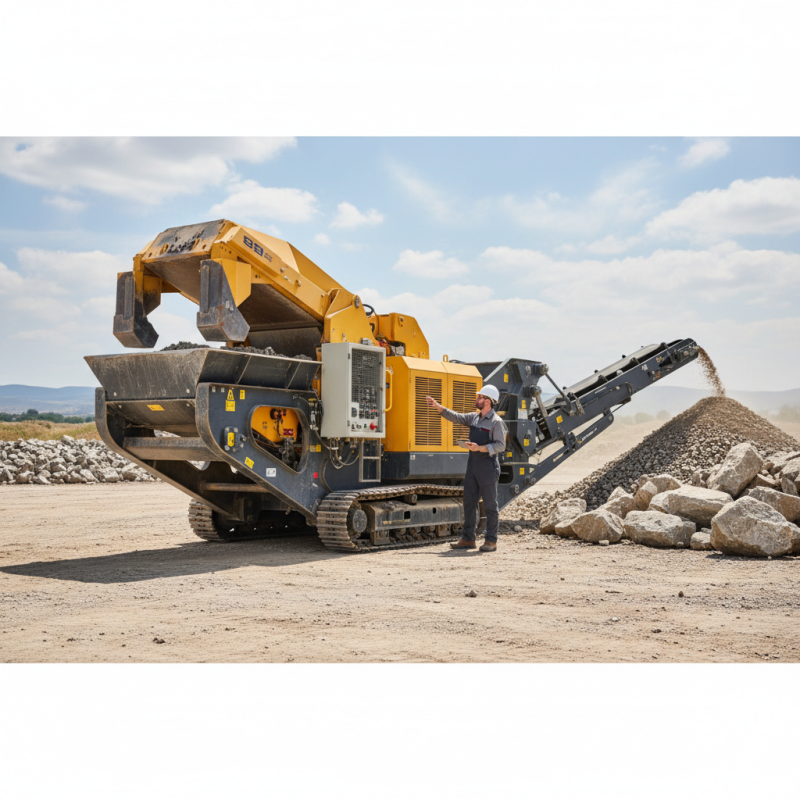
When selecting a Portable Jaw Crusher, consider your project's specific needs. Think about the materials you will crush and the expected production rates. Some models excel in portability, while others focus on crushing power. The weight and size matter, especially if mobility is a priority.
Understand the limitations of your choice. A heavier model might offer better durability but could be less mobile. A lightweight model may be easier to transport but could lack the strength for tougher jobs. It's essential to balance these factors based on your particular use case.
Understanding the Basics of Portable Jaw Crushers
When selecting a portable jaw crusher, understanding its fundamental components is crucial. These machines consist of a fixed jaw, a movable jaw, and a supporting structure. The fixed jaw is usually stationary, while the movable jaw crushes materials against it. The gap between the jaws determines the size of the output material. Smaller gaps produce finer materials, while wider gaps create larger chunks.
Not all portable jaw crushers are created equal. Different models come with varying capacities and features. Consider factors like size and weight. Some crushers are more compact and lighter, making them easier to transport. Others may offer advanced features that enhance productivity but may be bulkier. It's essential to strike a balance. A heavier, more powerful unit may not always be the best choice for every site.
The maintenance aspect often gets overlooked. Regular checks are necessary to keep the machines running smoothly. Problems can arise unexpectedly, leading to delays. Understanding the basics can help you identify signs of wear early. Adapting your choice based on specific needs will lead to better performance in the long run.
Key Features to Consider When Choosing a Portable Jaw Crusher
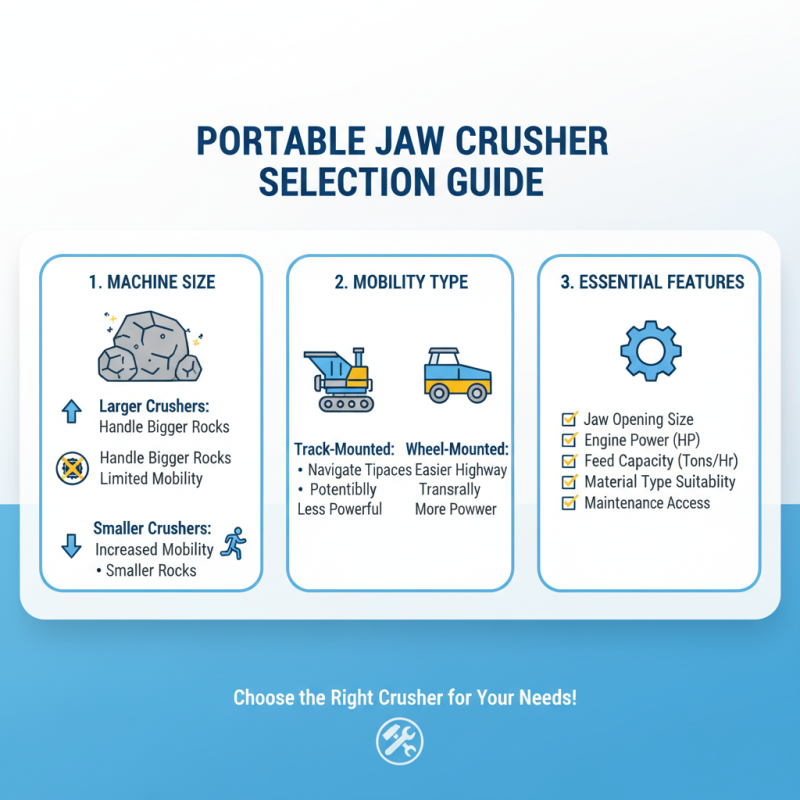
When selecting a portable jaw crusher, consider essential features that impact performance. The size of the machine is crucial. A larger crusher can handle bigger rocks but may limit mobility. Track-mounted models can navigate tight spaces, yet they might be less powerful.
Power options also play a significant role. Diesel engines provide independence and high torque. However, they can add weight and complexity. Electric models offer quieter operation and lower emissions, but require a reliable power source. Assess your specific needs to determine which power type suits your operations best.
Material selection is another critical factor. Robust materials ensure durability and longevity, especially in rugged environments. Look for features like replaceable wear parts and easy maintenance access. Reflect on how often you need to replace components. This could save time and money in the long run. Consider your daily production goals as well. A machine that emphasizes speed may compromise on quality, leading to flawed output.
Assessing Your Material Requirements and Crushing Needs
When choosing a portable jaw crusher, material requirements are crucial. Different materials demand specific setups. For instance, granite is hard and requires a robust machine. In contrast, softer materials like limestone require less power. According to industry studies, more than 70% of successful crushing operations align their equipment with material types.
Crushing needs vary based on project goals. Construction sites may need different output sizes than recycling facilities. A portable crusher’s jaw size often dictates its efficiency. Industry reports suggest that optimizing the jaw width can enhance throughputs by up to 30%. However, not all portable options excel in mobility versus crushing power. Some models struggle to balance both, making it essential to reflect on what matters most in your operation.
Common errors include neglecting to assess feed material characteristics. Failing to do so can lead to unplanned costs and inefficiencies. Moreover, a wrong choice may affect service life and maintenance frequency. The more you understand your specific needs, the better your choice will be. Make an informed decision that aligns with your project requirements.
Evaluating Mobility and Size Options for Your Application
When selecting a portable jaw crusher, mobility and size are key factors to consider. A compact design often enhances portability. This is crucial if your projects involve multiple job sites. A smaller crusher can fit in tight spaces, making it easier to transport. However, don't overlook other aspects like capacity. A light, portable model may lack sufficient power for larger tasks.
Evaluate the terrain and site conditions where you'll operate the crusher. Steep or rough terrain can limit mobility. In contrast, a model with tracks may perform better on uneven ground. Certain models will be confined by weight restrictions on transport vehicles. It's essential to balance mobility with operational requirements for effective excavation.
Finding the right size can require some trial and error. Some users may underestimate their needs and end up with a unit that is too small. It's beneficial to assess your material volume and job duration. Sometimes, investing in a more robust machine can save time in the long run. Don't rush into a decision; take time to reflect on your specific applications before finalizing your choice.
2026 How to Choose the Right Portable Jaw Crusher for Your Needs?
| Model |
Weight (lbs) |
Dimensions (L x W x H) |
Max Feed Size (inches) |
Capacity (TPH) |
Mobility Features |
Recommended Applications |
| Model A |
5,000 |
12' x 8' x 10' |
12 |
50 |
Track-mounted |
Construction, Recycling |
| Model B |
6,500 |
14' x 9' x 11' |
15 |
60 |
Wheeled |
Mining, Demolition |
| Model C |
4,200 |
10' x 7' x 9' |
10 |
40 |
Compact, Portable |
Small Jobs, Landscaping |
| Model D |
7,000 |
15' x 10' x 12' |
18 |
70 |
Crawler |
Quarrying, Heavy-duty |
Cost Considerations and Budgeting for Your Portable Crusher
When considering a portable jaw crusher, cost is a key factor. Prices can vary widely, influenced by size, features, and materials. It's important to analyze your budget carefully. Determine how much you can afford to spend. Investing in a high-quality unit may save money over time. Cheap options could lead to increased maintenance costs.
Remember to factor in additional expenses. Shipping, setup, and operation costs should be considered. It may be tempting to choose the lowest price upfront. However, think about the long-term implications. A more expensive crusher could be more efficient and durable. This might reduce operational costs down the line.
Reflect on the type of projects you have. Each project may require different capabilities from your crusher. If you underestimate your needs, it could lead to frustration. Evaluate your materials and site conditions. This thoughtful approach will help ensure you choose the right machine within your budget constraints.
Cost Comparison of Portable Jaw Crushers