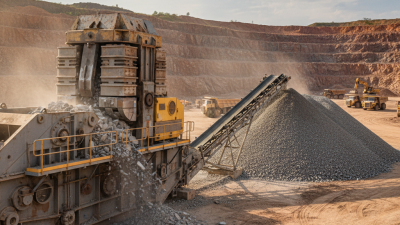
Choosing a Concrete Jaw Crusher is a practical decision, not a simple equipment purchase. The right model must match your feed material, production target, site conditions, and operating budget. A crusher handling demolished concrete faces different challenges than one processing clean, uniform rock. Reinforcing steel, moisture, dust, and unexpected oversize pieces can quickly change performance.
This guide presents ten practical tips for comparing jaw crushers with greater confidence. It considers feed opening, discharge size, crushing capacity, power requirements, mobility, wear parts, maintenance access, and safety features. Small details matter. For example, a narrow feed opening may force workers to remove large chunks manually. An unsuitable discharge setting can create excess fines or repeated recirculation. These problems reduce output and increase operating costs.
Real-world experience should guide every estimate. Review manufacturer specifications, but verify them against your concrete mix and working conditions. Ask suppliers for test data, service records, and clear replacement-part support. A machine that looks efficient on paper may perform poorly under continuous dust, vibration, or irregular feeding. A perfect choice rarely exists. Some calculations will need revision after the first production trials. That is normal, but ignoring early warning signs is expensive. Careful inspection, operator feedback, and documented maintenance can reveal whether the Concrete Jaw Crusher is genuinely reliable for your application. Use these ten tips as a structured starting point, not as a substitute for professional assessment.
Define the Concrete Crushing Task and Required Output before choosing a jaw crusher. The task may involve demolition slabs, reinforced concrete, or recycled aggregate production. Each material behaves differently. Concrete with heavy rebar can cause stoppages and needs controlled feeding. Moist, clay-coated material may reduce capacity and worsen product quality.
The U.S. Environmental Protection Agency estimated 600 million tons of construction and demolition debris in 2018. Concrete represented a major share of that stream. The U.S. Geological Survey reported about 1.9 billion metric tons of crushed stone production in 2023. These figures show the scale of aggregate demand, but they do not define your site’s real output.
Measure the feed size, moisture, steel content, and required product gradation. Then convert the target into saleable tons per hour, not merely crusher throughput. For example, a 100-ton-per-hour target may require a higher rated capacity when feeding is irregular. Allow space for maintenance and short interruptions. Small details matter.
A practical test uses representative concrete pieces, not handpicked samples. Record belt scale readings, fines percentage, and oversize during several operating periods. The first estimate may be wrong. Recheck it. A crusher producing fast material is not successful if the final aggregate fails the specification or requires repeated screening. Industry reports offer useful context, but your site data should control the selection.

10 Tips for Choosing a Concrete Jaw Crusher
Match Crusher Size to Material, Capacity, and Worksite Conditions
Choosing a concrete jaw crusher starts with the feed material, not the advertised capacity. Measure the largest concrete pieces, then compare them with the crusher’s feed opening. Oversized chunks can cause bridging, uneven wear, and frustrating stoppages. Measure twice. Demolition concrete may include rebar, timber, or soil, so inspect several loads before selecting equipment.
Hard, thick concrete demands stronger crushing force and durable wear parts. Moist or clay-coated material may reduce flow and lower actual output. A practical capacity estimate should include loading delays, sorting, and discharge time. Do not design around a perfect hourly figure. I once underestimated wet feed, and the crusher performed well below my spreadsheet prediction. Field samples would have exposed that mistake earlier.
Worksite conditions matter just as much. Check ground stability, access width, transport limits, dust control, and available power. A large crusher may suit a fixed recycling yard but fail on a narrow urban site. Choose an adjustable discharge setting for the required aggregate size, and confirm that maintenance access is realistic. Operators need clear visibility, guarded moving parts, and simple emergency controls. Also consider noise limits and nearby structures. A compact unit can be efficient, but only when its opening and capacity match the concrete stream. Real conditions decide performance.
10 Tips for Choosing a Concrete Jaw Crusher
Evaluate Jaw Design, Power Use, and Crushing Performance
Choosing a concrete jaw crusher starts with its jaw design. A deep crushing chamber can accept larger feed without constant repositioning. Check the jaw angle, opening size, and stroke length against your planned material. These details affect how efficiently concrete moves through the chamber. Look for replaceable wear plates with practical access points. Maintenance should not require excessive downtime.
Power use deserves close attention. Compare rated motor power with the expected feed size, moisture, and daily workload. A larger motor does not always deliver better production. It may consume more electricity during light-duty operation. Measure output per kilowatt-hour when possible, rather than trusting power ratings alone. Real site results can differ.
Crushing performance depends on more than a specification sheet. Track the product size, hourly capacity, and percentage of unwanted oversize. Concrete containing steel or damp fines may reduce throughput and increase wear. I once focused too heavily on maximum capacity and underestimated maintenance intervals. That choice looked efficient on paper. It was not.
Ask for test data from material similar to yours. A short trial can reveal vibration, dust control needs, and actual fuel or power demand. Inspect the discharge area after several cycles. Consistent material flow matters. Also review operator visibility and emergency access before purchase. Small design weaknesses become expensive during repetitive work.
Compare common jaw crusher classes by nominal feed opening, practical throughput, and installed motor power. These indicative ranges help evaluate jaw design, power use, and crushing performance; actual results depend on concrete strength, moisture, rebar, CSS setting, feed grading, and operating conditions.
Choosing a concrete jaw crusher starts with safety, not maximum capacity. On a dusty demolition site, operators need clear sightlines and simple controls. Check for guarded moving parts, a reliable emergency stop, and stable access platforms. Warning labels should remain readable after washing and daily vibration. Do not trust appearances alone. I once inspected a machine with excellent guarding but poor footing near the inspection hatch.
Maintenance access directly affects uptime and worker exposure. Look for wide service doors, removable panels, and grease points reachable from ground level. Technicians should replace wear plates without climbing over the crushing chamber. Ask whether routine inspections require special tools or several workers. Good access saves minutes every shift. Small delays accumulate. Still, easy access cannot replace lockout procedures and trained personnel.
Replacement parts deserve equal attention before purchase. Request a clear parts list, service schedule, and realistic delivery times. Confirm the jaw dimensions, cheek plate design, and fastener specifications. Keep several critical wear parts in dry, labeled storage. A dependable supplier should provide traceable documentation and technical support. Cheap alternatives may fit poorly and create uneven wear. That risk is easy to underestimate. Review local service capability, because a delayed bearing or jaw plate can stop a project for days.
| No. | Selection Tip | What to Check | Practical Guideline | Warning Signs | Priority |
|---|---|---|---|---|---|
| 1 | Match the feed opening to the concrete size | Review the maximum feed opening and the largest concrete pieces expected at the site. | Choose a jaw opening that accepts the planned feed without frequent manual breaking or bridging. | Oversized feed, repeated blockages, or excessive use of a hydraulic breaker. | Critical |
| 2 | Confirm the required output size | Check the adjustable closed-side setting and the required product gradation. | Select a crusher that can produce the target size while maintaining stable throughput and acceptable wear. | The desired product size can only be achieved at very low capacity or with excessive recirculation. | High |
| 3 | Evaluate safety guarding | Inspect guards around the flywheel, drive components, belts, shafts, and other moving parts. | Guards should be securely fitted, durable, and removable only with deliberate maintenance access. | Exposed rotating parts, loose panels, missing fasteners, or openings that allow hand access. | Critical |
| 4 | Check emergency-stop and isolation provisions | Verify accessible emergency stops, lockout/tagout points, and safe shutdown procedures. | Controls should be clearly labeled and positioned where operators can reach them without approaching the feed opening. | No visible emergency stop, unclear isolation point, or controls located in a hazardous area. | Critical |
| 5 | Assess tramp-iron protection | Determine whether the crusher has a suitable overload or non-crushable-object release system. | A protection system should reduce the risk of major damage when steel or other uncrushable material enters the chamber. | Frequent frame damage, broken toggle components, or reliance on manual clearing while energized. | High |
| 6 | Inspect maintenance access | Look for access doors, lifting points, platforms, service clearances, and safe routes to wear components. | Routine inspection and jaw-die replacement should be possible without unsafe climbing or unnecessary dismantling. | Restricted access, awkward lifting, poor lighting, or maintenance work directly above moving equipment. | Critical |
| 7 | Review jaw-die wear adjustment | Check how the discharge setting is adjusted and how jaw plates are secured and reversed, if applicable. | Prefer designs that allow controlled setting adjustment and practical use of both wear surfaces when permitted by the manual. | Uneven wear, difficult adjustment, loose jaw plates, or reduced capacity as the dies wear. | High |
| 8 | Verify lubrication and inspection points | Identify grease points, bearing temperature checks, belt inspection areas, and recommended service intervals. | Service points should be labeled, reachable from a safe position, and supported by a clear maintenance schedule. | Unmarked grease points, inaccessible bearings, recurring overheating, or unclear lubrication requirements. | High |
| 9 | Confirm replacement-parts availability | Ask about jaw plates, toggle components, bearings, belts, fasteners, and other routine replacement parts. | Obtain part numbers, material specifications, lead times, interchangeability information, and recommended stock levels. | No parts list, unidentified wear materials, long supply delays, or dependence on custom-made emergency parts. | High |
| 10 | Consider dust, noise, and operating conditions | Assess dust suppression, water connection requirements, noise exposure, climate, mobility, and site power availability. | Choose a configuration compatible with the site’s environmental controls, electrical supply, transport limits, and operating temperature. | Uncontrolled dust, excessive noise, unstable setup, inadequate power, or unsuitable protection from weather. | High |
A concrete jaw crusher should be judged by total cost, not its purchase price. The U.S. Geological Survey reported about 1.5 billion metric tons of crushed stone production in 2023. That scale makes uptime financially important. Tip 1: Compare output at your actual feed size. Tip 2: Check energy use per processed ton. Tip 3: Calculate transport, installation, and commissioning costs. A cheaper machine can become expensive when delivery delays stop production.
Tip 4: Study jaw plate life under your rock conditions. Tip 5: Request documented replacement times for bearings, liners, and belts. Tip 6: Compare warranty limits, including labor and travel. Tip 7: Ask whether critical parts are locally stocked. The International Council on Mining and Metals emphasizes maintenance planning and asset reliability as major productivity factors. Still, a promised service response is not proof. Ask for service records from comparable sites. I have seen purchase teams overlook this detail.
Tip 8: Measure technical support by response time, not brochures. Tip 9: Include operator training, inspections, and software updates in the contract. Tip 10: Estimate resale value after five years. The U.S. Bureau of Labor Statistics continues to show strong demand for industrial maintenance skills, which can increase downtime when operators lack training. A 20% contingency may help, but it is not universal. Hard rock, wet feed, and remote locations can change the calculation sharply. Use three-year and five-year cost models, then challenge every assumption.