Top Portable Jaw Crusher Manufacturers for Global Buyers?
For global buyers, choosing a Portable Jaw Crusher involves more than comparing advertised capacity. Manufacturers differ in engineering depth, build quality, mobility systems, and after-sales support. A machine that performs well in a quarry may struggle on a crowded demolition site. Real decisions depend on feed size, rock hardness, moisture, transport limits, and daily output. Small details matter.
This guide examines leading manufacturers through practical buyer criteria, not promotional claims alone. It considers jaw design, chassis stability, fuel or electric options, dust control, maintenance access, and parts availability. It also reviews documented operating experience, warranty terms, dealer networks, safety features, and technical training. These factors can reduce downtime when a conveyor belt stops beside a remote worksite. Still, no ranking fits every project. That point deserves honesty.
Specifications may look precise, yet performance changes with stone shape, operator habits, and site conditions. Published data can also use different testing methods, making direct comparisons imperfect. Buyers should request verified capacity figures, service references, inspection records, and clear delivery responsibilities. Regional certification and environmental requirements also need confirmation before purchase. The manufacturers discussed here are evaluated for transparent information, proven expertise, responsive support, and consistent equipment performance. Some conclusions remain practical judgments, not laboratory verdicts. Use this overview as a careful starting point for a confident, well-informed investment.
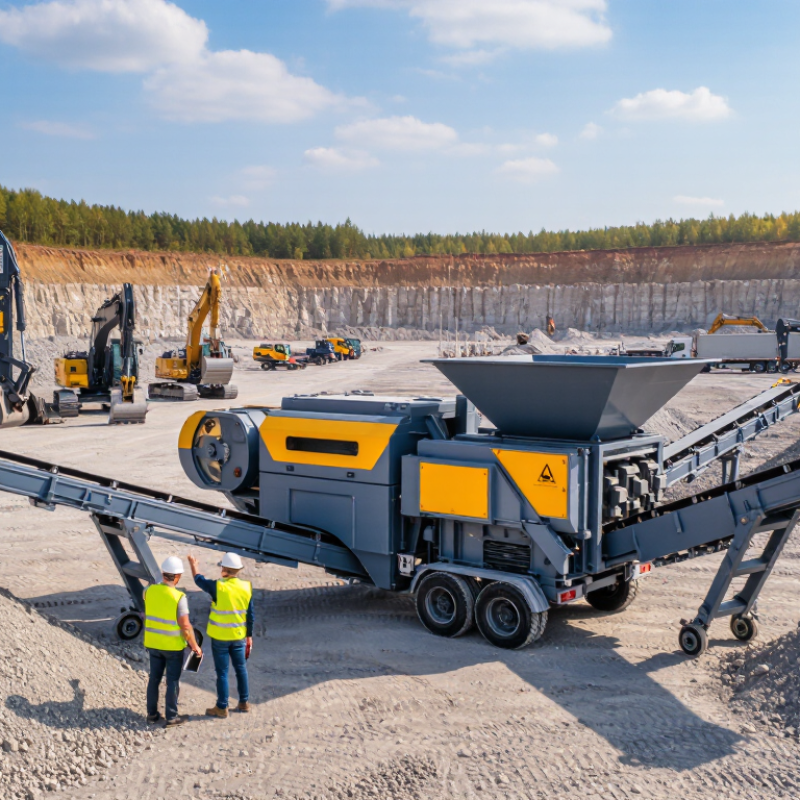
Portable Jaw Crusher Fundamentals: 50–1,500 t/h Capacity and 0–300 mm CSS
Portable jaw crushers serve projects where material must move between pits, roads, and recycling sites. Their typical capacity range spans 50 to 1,500 t/h, but output depends on feed gradation, rock strength, moisture, and operator settings. A catalogue figure is not a guarantee.
The key control is CSS, or closed-side setting. A 0–300 mm CSS range allows operators to adjust the jaw opening for different product sizes. Smaller CSS generally produces finer material, while wider settings increase throughput. However, tighter settings can raise power demand and accelerate liner wear. In a limestone quarry, a 75 mm CSS may support aggregate production, while hard basalt may require a wider setting and slower feeding. Keep it practical.
Experienced buyers should request test results based on their own feed material. Ask for verified throughput, maximum feed size, motor power, dust-control details, transport dimensions, and service access. A belt scale and hydraulic CSS adjustment can improve daily control. Remote monitoring also helps track overloads and maintenance intervals.
I have seen projects miss their target because capacity was measured with clean, dry stone. Real feed often contains fines and clay. That difference matters. Manufacturers should explain performance limits clearly, provide wear-part data, and support commissioning on site. A portable unit is only useful when its capacity, CSS range, and mobility match the actual working conditions.
Global Manufacturer Profiles: Metso, Sandvik, Kleemann, Finlay, and McCloskey
Global buyers often compare five established portable jaw crusher manufacturers through their engineering styles, service networks, and field records. One Nordic producer is known for modular equipment, strong automation, and reliable process integration. Another European supplier emphasizes rugged frames, easy maintenance, and crushing performance in hard rock applications. Both typically suit contractors managing demanding quarry schedules.
A third manufacturer focuses on compact, track-mounted plants for urban projects and short-distance relocation. Its designs often include practical access platforms and clear service points. A fourth supplier has built a reputation around mobile screening and crushing systems, offering flexible configurations for recycled materials and aggregates. The fifth is widely associated with heavy-duty portable units, large feed openings, and high production capacity. These differences matter more than brochure specifications.
From field inspections, operators should study jaw plate life, fuel use, dust control, and setup time. Ask how quickly replacement parts reach remote sites. Request verified output data from similar rock types. Small details count. A clean hydraulic layout can reduce repair hours. Still, no manufacturer is perfect. Published capacity may change with moisture, feed gradation, operator skill, and discharge settings. Buyers should also inspect local training support and warranty response. A machine that performs well in a test yard may struggle on steep ground or during freezing mornings. Careful trials remain essential.
Typical Portable Jaw Crusher Capacity by Duty Class
Portable jaw crushers are commonly grouped into compact, mid-size, and large-duty classes.
Typical nominal throughput increases with feed-opening size, but actual production depends on
material hardness, feed gradation, closed-side setting, moisture, and operating conditions.
Comparison Metrics: Feed Size, Engine Power, Transport Weight, and Fuel Use
Global buyers should compare portable jaw crusher manufacturers through measurable operating data, not brochure claims.
Feed size determines whether the machine can accept blasted rock directly. A 600 mm opening may suit medium quarry material, while oversized feed requires secondary breaking. Check the maximum feed rating and the recommended continuous size. These figures are not always identical.
Engine power affects crushing speed, hydraulic response, and climbing ability on rough ground. However, higher horsepower does not guarantee better production. Match power with jaw opening, discharge setting, and material hardness. A diesel engine rated around 200 kW may perform differently under wet clay and dry granite. Ask for test conditions and hourly output records.
Transport weight changes the project budget before crushing begins.
Include the chassis, hopper, magnet, conveyors, and fuel in the calculation. A lighter unit may reduce permit and hauling costs, but it can feel less stable on uneven sites. Fuel use deserves the same careful check. Request litres per operating hour at a stated load, not an ideal laboratory figure. Idle time, frequent relocation, and cold starts can raise consumption sharply. Field inspections often expose these gaps. My own preference would be verified data, though even verified data needs local testing. A short trial with the buyer’s feed material can reveal blockages, dust issues, and real fuel demand.
Compliance Data: CE, Tier 4 Final, Dust Control, Noise, and Safety Standards
For global buyers, a portable jaw crusher should arrive with traceable compliance evidence, not only a CE label.
CE conformity requires a documented risk assessment, technical file, Declaration of Conformity, guarding, emergency stops, and safe maintenance procedures. The EU Machinery Directive and applicable harmonized standards remain important references, although requirements may change under the Machinery Regulation. Ask for current documents.
Engine emissions also matter on dusty sites.
EPA Tier 4 Final rules target major reductions in particulate matter and nitrogen oxides from nonroad diesel engines. Request engine test data, after-treatment details, and service records. Dust controls should include water sprays, sealed transfer points, or local extraction. OSHA’s respirable crystalline silica standard sets a 50 µg/m³, eight-hour permissible exposure limit for covered workplaces. Real performance depends on material moisture, wind, and operator habits. Paperwork alone is not enough.
Tips:
Check measured sound pressure at the operator position. NIOSH uses 85 dBA over eight hours as a recommended exposure limit, while local rules may differ. Request noise test conditions, not a single marketing number. Inspect belt guards, access platforms, remote stops, and lockout points during a live demonstration. A useful audit records dust readings, noise levels, fuel use, and maintenance faults across several shifts. Some buyers overlook cold starts and blocked spray nozzles. That is a mistake worth correcting before shipment.
Buyer Evaluation: Lifecycle Cost, Warranty, Parts Lead Time, and Dealer Coverage
Top Portable Jaw Crusher Manufacturers for Global Buyers?
A portable jaw crusher should be judged by lifecycle cost, not its purchase invoice. The U.S. Department of Energy’s Operations and Maintenance Best Practices Guide estimates that maintenance can represent 15% to 40% of operating costs in industrial facilities. For buyers, that range makes service access and parts pricing commercially important. Request a five-year cost model covering fuel, wear plates, labor, transport, and planned shutdowns. Ask for actual field records, not optimistic estimates.
Warranty terms need careful reading. A longer warranty may exclude liners, belts, bearings, or damage caused by unsuitable feed material. Confirm response times, inspection procedures, and whether labor is reimbursed locally. Parts lead time should be measured in days. A 48-hour quotation is not the same as a 48-hour delivery. The 2024 Gartner Supply Chain Top 25 research highlights resilience and responsiveness as major supply-chain priorities, but remote quarry buyers need evidence at dealer level. Check local inventory for jaw dies, toggle plates, filters, and hydraulic components. Two nearby service points are better than one impressive headquarters.
Dealer coverage also affects resale value and downtime risk. Compare technician numbers, training records, emergency contact hours, and mobile-service capacity within 200 kilometers of the site. EquipmentWatch’s 2024 Cost Recovery Handbook shows that utilization and ownership costs strongly influence equipment economics. Still, published averages can mislead. Soil, haul distance, operator skill, and seasonal access change the result. A spreadsheet helps, but a witnessed site trial is more honest.